
Ship a Car from New York to California
New York to California is a 2,794-mile corridor that carriers run mainly on I-80, I-70 and I-15. Cars shipped in this distance band have a reference range of $1,175 to $1,650.
New York to California at a glance
| Road distance | 2,794 miles (New York, NY to Los Angeles, CA) |
|---|---|
| Drive time, no stops | About 50 hours |
| Wave transit estimate, days | 7–9 |
| Reference range | $1,175–$1,650 |
| Primary interstates | I-80, I-70 and I-15 |
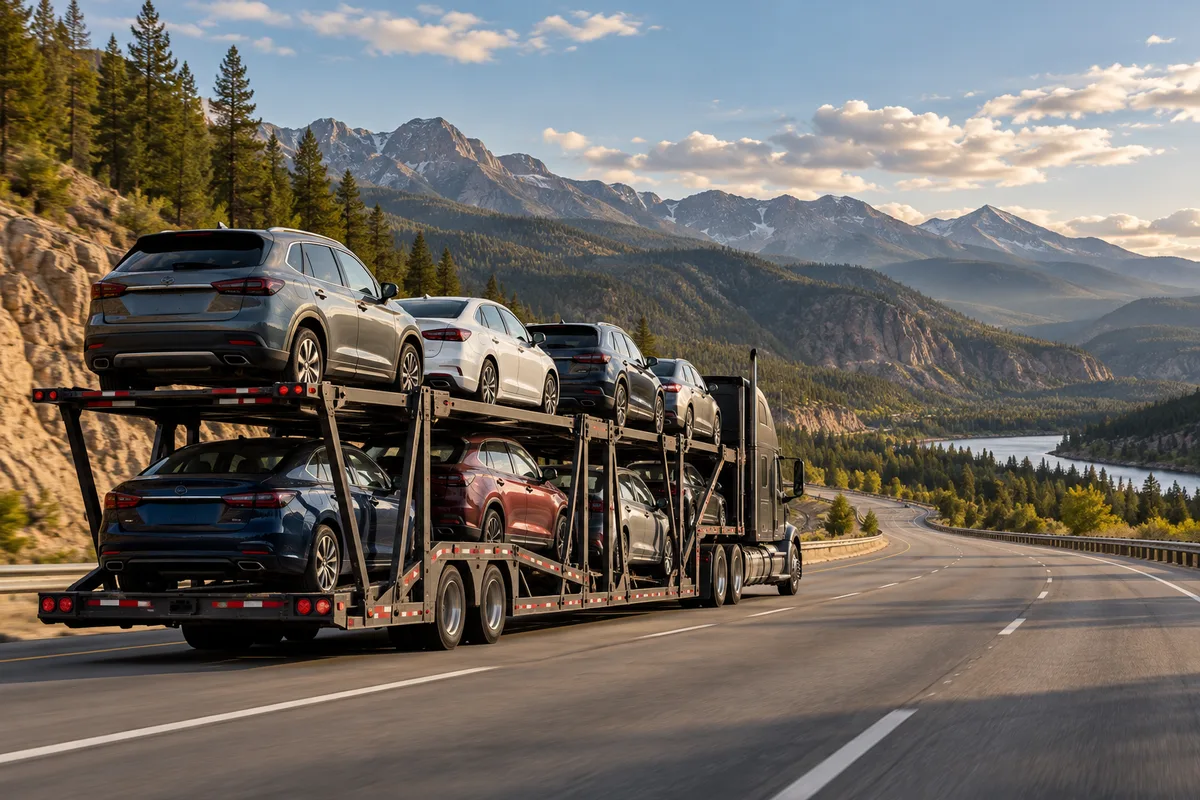
How much does it cost to ship a car from New York to California?
Vehicles moving in the 2,500–3,000-mile distance band cost $1,175 to $1,650 as a reference range. A New York-to-California shipment at 2,794 miles falls inside that band.
A reference range is a planning figure, not a price anyone has offered you. This one is for a sedan in the 2,500–3,000-mile band, so you can tell a realistic number from an unrealistic one before you ask for a real price. Your actual price comes from the quote form on this page and depends on your vehicle, pickup date and addresses. Two things push a cross-country quote above the band: a car that does not run, which needs a winch and a carrier equipped for it, and a hard delivery date, which takes away the dispatcher's freedom to wait for a truck already heading west.
What you would pay by vehicle type
A standard sedan is the baseline for the $1,175–$1,650 reference range on this lane. Larger vehicles cost more on every lane Wave ships, by the same percentages everywhere.
| Vehicle type | Against the sedan baseline |
|---|---|
| Sedan / coupe / small car | Reference range: $1,175–$1,650 |
How long does it take?
Wave estimates 7 to 9 days in transit on this lane, counted from the day a carrier collects the vehicle to the day it is delivered.
Wave's model assumes 550 miles of driving a day, then adds whole days of dispatch and consolidation slack on top: one day on the low end for every full three driving days, and on the high end one day for a short lane or two days for every full five days on the low end. It is our own operating assumption, not a measured fleet average.
Wave estimates 10 to 14 days from booking to delivery on regular service, because the pickup window comes before any of the driving does.
| Service level | Pickup window, days | In transit, days | Total, days |
|---|---|---|---|
| Expedited | 1-2 | 7-9 | 8-11 |
| Regular | 3-5 | 7-9 | 10-14 |
| Flexible | 6-15 | 7-9 | 13-24 |
What route does the truck actually take?
Carriers moving a vehicle from New York to California run one long corridor: I-80 west across the northern plains, I-76 and I-70 through Denver and the Colorado Rockies, then I-15 south toward Los Angeles.
I-80 carries 1,473 of this route's 2,794 miles, more than half the trip on a single interstate, which is unusual even among long lanes. I-70 accounts for 502 miles and I-15 for 469 miles. Those two legs take a truck off the plains, over the Continental Divide west of Denver and down through the desert toward southern California. I-76 adds 186 miles as the connector that drops the route off I-80 toward Denver, and I-10 covers the last 40 miles into the Los Angeles basin. Denver, Colorado is the only metro on the route itself, about 5 miles off the measured line. The route also uses 136 miles of I-90 and 108 miles of I-280. Those totals add up separate segments that carry the same number, so each is not one continuous stretch of road.
| Route | Used for | Interstates | Miles | Named metros |
|---|---|---|---|---|
| Primary route | not named | I-80 1,473 mi / I-70 502 mi / I-15 469 mi / I-76 186 mi / I-90 136 mi / I-280 108 mi / I-10 40 mi | 2,794 mi | Denver, CO |
What is different about this lane?
New York to California is the longest of the 20 lanes Wave publishes, at 2,794 miles, which is 62 miles further than California to Florida, the next longest lane Wave publishes.
That length puts this lane at the top of the list for both transit time and price. Only 2 of the 20 lanes Wave publishes fall in the 2,500–3,000-mile band. For you the practical effect is scheduling more than price. A coast-to-coast load goes to a truck that is already making the whole trip, and in any given week there are fewer of those than trucks working a single region.
Open or enclosed on this route?
Open transport is the usual choice for New York to California. Enclosed service is for a vehicle that needs added protection. Treat the reference range as planning context rather than a live quote.
Enclosed transport costs 40-50% more than open. On a run this long, enclosed earns that premium mainly for a classic, exotic, low-clearance or freshly restored car facing 2,794 miles of highway debris, mountain grit and desert sun. For an ordinary daily driver, the extra cost buys protection the car does not need.
How to book, step by step
Booking a New York-to-California car shipment takes 5 steps, from a quote request to a signed bill of lading at delivery.
- 01
- 02
- 03
- 04
- 05
Frequently asked questions about shipping New York to California
- How much does it cost to ship a car from New York to California?
Car shipping in the 2,500–3,000-mile band runs $1,175 to $1,650 as an open-trailer reference range. A New York-to-California shipment at 2,794 miles falls inside that band. This is a reference price range for this distance band, not a quote for your shipment. Your actual rate varies depending on: vehicle details, the specific pickup location, the delivery location, the timing of pickup and delivery, any additional services, driver availability, and other market conditions.
- How long does it take to ship a car from New York to California?
Wave estimates 7 to 9 days in transit on this lane, counted from the day a carrier collects the vehicle to the day it is delivered.
- What is the driving distance from New York to California?
The road distance from New York, NY to Los Angeles, CA is 2,794 miles, computed on the OpenStreetMap road network and published under ODbL. That makes New York to California the longest of the 20 lanes Wave publishes. A shipment ending in San Francisco or Sacramento instead of Los Angeles covers a different distance than 2,794 miles.
- Why does New York to California take longer than other cross-country lanes?
Wave estimates 7 to 9 days in transit on this lane, counted from the day a carrier collects the vehicle to the day it is delivered.
- Can I book enclosed transport from New York to California?
Yes. Enclosed transport is available on any lane Wave Auto Transport books, including New York to California. Enclosed transport typically costs 40% to 50% more than open transport. Request a live quote for a current enclosed price.
- Which highways do carriers use between New York and California?
Carriers running New York to California spend most of the trip on I-80, which covers 1,473 of the route's 2,794 miles, then take I-76 toward Denver, I-70 west across the Colorado Rockies and I-15 south, joining I-10 for the final 40 miles into Los Angeles. Denver, Colorado is the only metro directly on the route.
- Can a car carrier pick up in Manhattan?
Rarely at the exact address. A full-length car carrier cannot turn, park or load on most Manhattan blocks, and much of Brooklyn and Queens is no easier once alternate-side parking rules and low branches are counted. On a New York-to-California booking the driver calls ahead and arranges a wide commercial street, a large parking lot or a staging point in New Jersey near the truck's I-80 run, which costs a short drive and saves a day of failed attempts.
- How fast can a truck pick the car up in New York?
Wave estimates 7 to 9 days in transit on this lane, counted from the day a carrier collects the vehicle to the day it is delivered.
Related routes
| Route | Why it is related |
|---|---|
| California to Florida car shipping | California to Florida is the second-longest lane in this set, at 2,732 miles, and the only other lane in the 2,500–3,000-mile band |
| Texas to California car shipping | Shares California as an endpoint state |
| California to Texas car shipping | Shares California as an endpoint state |
| New York to Florida car shipping | Shares New York as an endpoint state |
| Florida to New York car shipping | Shares New York as an endpoint state |