
What is enclosed car shipping and who is it for?
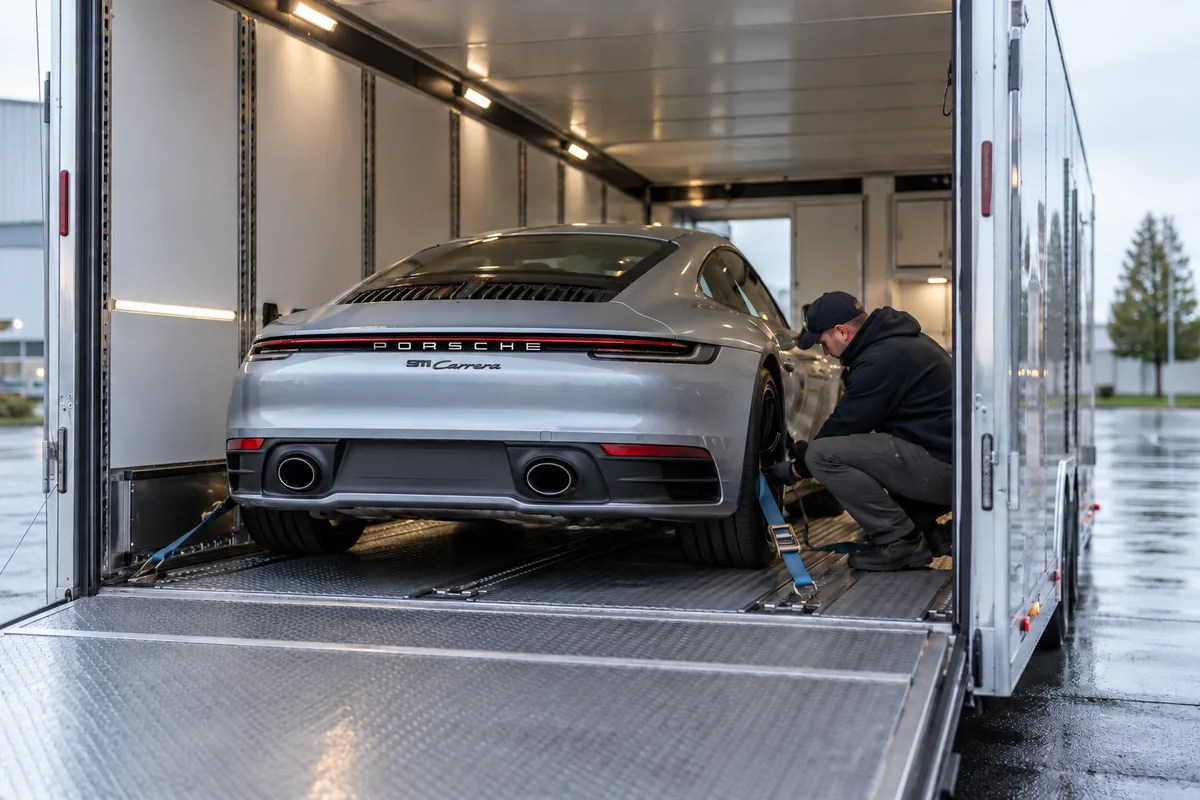
Enclosed car shipping keeps your car sealed away from rain, road spray and flying debris behind solid trailer walls the whole way there. We only book carriers running hardside trailers for it, never the softside, tarp-covered kind.
We're a broker. We arrange enclosed transport through a network of vetted carriers, and we don't own the trucks. Every carrier we dispatch for an enclosed load runs a hardside trailer: rigid metal panels bolted to a frame, not fabric stretched over one. If your car is a classic, an exotic, a fresh restoration, or dealer inventory worth protecting, this is built for it. It's also open to anyone who wants that extra layer, no matter what the car is worth. A motorcycle is another common candidate: a bike has no body panels to shield its engine, chrome and paint from road spray the way a car's shell does. See motorcycle shipping for how a bike gets loaded and secured differently.
What does enclosed car shipping cost?
Ship your car up to 500 miles enclosed and the reference range is $500 to $800.
Two more distances have a reference range: 1,000 to 1,500 miles runs $1,300 to $1,725, and 2,500 to 3,000 miles runs $1,650 to $2,350. Other distances aren't listed here yet. Get a live quote and you'll have a real number in minutes either way.
| Distance band | Enclosed reference range |
|---|---|
| 0–500 mi | $500–$800 |
| 500–1,000 mi | |
| 1,000–1,500 mi | $1,300–$1,725 |
| 1,500–2,000 mi | |
| 2,000–2,500 mi | |
| 2,500–3,000 mi | $1,650–$2,350 |
| 3,000+ mi |
Enclosed transport costs 40% to 50% more than open transport. Short hauls can run even higher.
How does enclosed car shipping work, step by step?
Booking enclosed shipping follows the same process as any Wave shipment, with one difference: the carrier we assign has to run a hardside enclosed trailer.
- 01
- 02
- 03
- 04
- 05
Enclosed vs open transport
Open transport carries your car exposed on a multi-car rack; enclosed transport seals it inside a covered trailer, and we only dispatch hardside enclosed trailers, never softside units.
| Factor | Open transport | Enclosed transport |
|---|---|---|
| Weather & road exposure | Your car rides exposed on an open rack. Rain, road spray and debris from other traffic reach it. | Your car rides inside a fully enclosed trailer, sealed from weather and road debris. |
| Trailer we dispatch | Standard open multi-car carrier. | Hardside only. We never book a softside (tarp/fabric) enclosed trailer. |
| Who books it | Everyday sedans, SUVs, and trucks. The most common, most economical choice. | Classics, exotics, luxury cars, and other high-value vehicles that need extra protection. |
| Price relative to the other service | The lower-cost default for most shipments. | Costs more. See the reference range and the enclosed premium above. |
| Damage rate | Our own site calls open-transport damage rates "typically very low". That's our description, not an audited stat. | Not separately measured. The extra protection is why higher-value vehicles go enclosed. |
When enclosed car shipping is NOT the right choice
If your car is an ordinary daily driver with nothing exceptional about it, skip enclosed. Open transport is the standard, cheaper choice for most shipments.
The math changes when the car itself changes: a classic, an exotic, a fresh restoration, a dealer's high-value inventory unit, a soft top or delicate paint that road debris could genuinely damage, or you simply want the extra layer regardless of what the car is worth. Outside those cases, paying more to ship a car that depreciates like any other daily driver doesn't buy you much.
What we do and don't do for enclosed transport
We only dispatch enclosed shipments on hardside trailers. We never book a softside, tarp-style unit.
A hardside trailer has rigid aluminum or steel panels bolted to a frame, built to keep weather and road debris out completely. A softside trailer is a tarp or heavy fabric skin stretched over a frame. It blocks rain better than an open rack, but it flexes in wind and takes less of a hit than a hardside unit. Every carrier in our enclosed network runs hardside. We're a broker: we arrange the carrier match. We don't own or drive the trucks ourselves.
Enclosed car shipping FAQs
- What is enclosed car shipping?
Enclosed car shipping moves your car inside a fully covered trailer instead of on an open rack, sealing it off from rain, road spray, and highway debris for the whole trip. We only dispatch hardside enclosed trailers for this service, never softside units.
- How much does enclosed car shipping cost?
Up to 500 miles, the reference range is $500 to $800. Two more bands are published too: 1,000 to 1,500 miles runs $1,300 to $1,725, and 2,500 to 3,000 miles runs $1,650 to $2,350. This is a reference price range, not a quote for your shipment — get a live quote for the real number.
- Is enclosed car shipping worth it?
It's worth the extra cost mainly for classics, exotics, luxury cars, or other high-value vehicles that need more protection than an open carrier gives. For an ordinary daily-driver sedan, SUV, or truck, open transport is the standard, cheaper choice for most shipments — see when enclosed isn't the right call.
- What is the difference between a hardside and a softside enclosed trailer?
A hardside trailer has rigid aluminum or steel panels bolted to a frame, built to seal out weather and debris completely. A softside trailer is a tarp or heavy fabric skin stretched over a frame. It blocks rain but flexes in wind and takes less of a hit than a hardside unit.
- Does Wave Auto Transport use hardside or softside enclosed trailers?
Hardside, always. We don't book softside, tarp-style enclosed trailers for any shipment.
- Which vehicles should ship enclosed?
Classics, exotics, luxury cars, fresh restorations, and other high-value vehicles ship enclosed most often. A car with a soft top or delicate paint that road debris could genuinely damage is a good candidate too, even if it isn't worth much on paper.
- Does enclosed shipping take longer than open shipping?
Transit time runs on distance, not on whether your car ships open or enclosed. Fewer carriers run hardside enclosed trailers than run open carriers, so pickup can sometimes take a little longer to schedule on the same route. Get a live quote for a current pickup-window estimate.
Last checked