
What is open car shipping and who is it for?
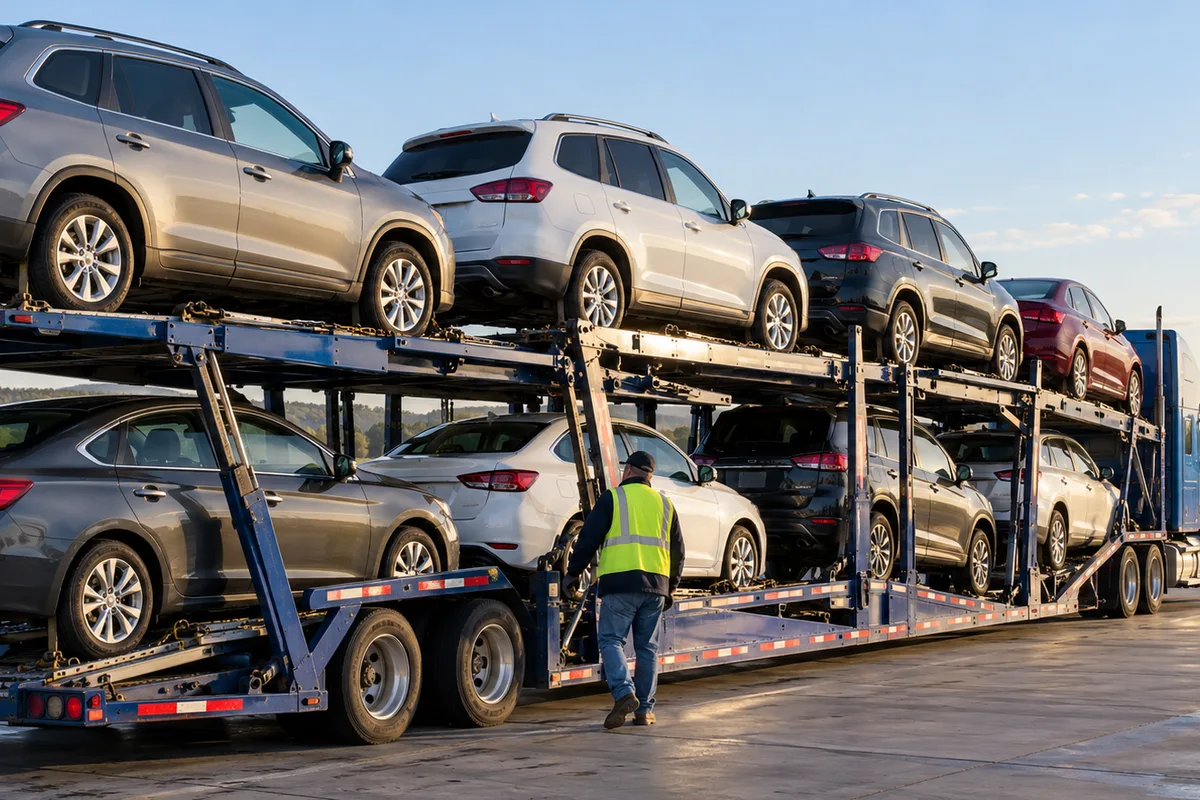
Open car shipping puts your car on a multi-car open rack, exposed to weather and road debris, at the lowest cost. It's the standard method behind most of the shipments we book.
We're a broker. We arrange your shipment through a network of vetted, licensed and insured carriers. We don't own the trucks. On open transport your car rides exposed to the weather and road elements. Wave describes the resulting damage rate as "typically very low". That is an unquantified description and not an audited statistic, but it's the honest starting point for weighing the tradeoff. Open is the right fit for the large majority of daily-driver sedans, SUVs, minivans and pickups, which is also why it's the cheapest option most customers get quoted. A motorcycle rides the same open carriers too, though a bike gets loaded and secured differently. See motorcycle shipping for that process. Two segments default to open almost every time instead of choosing enclosed: military members moving a personally owned vehicle, and college students shipping a car to or from campus. See military car shipping and college student car shipping for what's different about each one's booking, timing and discount.
What does open car shipping cost?
Ship your car up to 500 miles on open transport and the reference range is $325 to $575.
Longer distances are in the table below, all the way to $1,350–$2,075 for 3,000+ miles.
| Distance band | Reference range |
|---|---|
| 0–500 mi | $325–$575 |
| 500–1,000 mi | $625–$975 |
| 1,000–1,500 mi | $875–$1,200 |
| 1,500–2,000 mi | $1,000–$1,350 |
| 2,000–2,500 mi | $1,025–$1,550 |
| 2,500–3,000 mi | $1,175–$1,650 |
| 3,000+ mi | $1,350–$2,075 |
How does open car shipping work, step by step?
Booking open car shipping follows the same process as any Wave shipment, ending with your car riding on a standard multi-car open carrier instead of inside an enclosed trailer.
- 01
- 02
- 03
- 04
- 05
Open car shipping vs enclosed car shipping
Open transport puts your car on an uncovered rack next to other cars; enclosed transport puts it inside a fully covered trailer, and open is the standard, lower-cost choice for most of our bookings.
| Factor | Open transport | Enclosed transport |
|---|---|---|
| Weather & road exposure | Your car rides on an uncovered rack, directly exposed to rain, road spray and debris kicked up by other traffic. | Your car rides inside a covered trailer, shielded from rain, road spray and debris the whole trip. |
| Trailer we dispatch | A standard open multi-car carrier, which we use for most shipments. | Hardside only; we never dispatch softside, tarp-style units for this service. |
| Who books it | Everyday sedans, SUVs, minivans and pickups, which are the majority of what moves through our network. | Classics, exotics, luxury cars and other high-value vehicles that need extra protection. |
| Price relative to the other service | The lower-cost default for most shipments. | Costs more than open on the same lane. |
| Damage rate | Wave describes open-transport damage rates as "typically very low." That is not an audited number. | Not separately measured. Higher-value vehicles choose enclosed for the extra layer instead. |
When open car shipping is NOT the right choice
Skip open transport for a classic, exotic or recently restored car, a soft-top convertible, a car with delicate or freshly repainted bodywork, or dealer inventory worth well above a typical daily driver. Road debris and weather on an open rack can do cosmetic damage that matters far more on those cars.
For any of those, enclosed car shipping puts your car inside a sealed trailer instead of on an open rack, and every enclosed carrier in our network runs a hardside trailer, not a softside tarp unit. Outside those cases, paying more to protect an ordinary car that depreciates anyway doesn't buy you much, which is why open stays the default for most bookings.
What we do and don't do for open car shipping
We arrange open car shipping through vetted, licensed and insured carriers in our network. We don't own or operate the trucks ourselves.
As a broker, we match your shipment to a carrier running a standard open multi-car rig. We don't guarantee a specific carrier, a specific pickup hour or a damage-free trip. The weather and road exposure that make open the cheaper option are also why we call the resulting damage rate "typically very low" rather than zero. What we do commit to: a bill-of-lading inspection at pickup and again at delivery, and being upfront that we dispatch, we don't drive.
Open car shipping FAQs
- What is open car shipping?
Open car shipping moves your car on a multi-car open rack instead of inside a covered trailer. It's the most common, most affordable method we arrange for daily-driver vehicles moving anywhere in our network.
- How much does open car shipping cost?
Up to 500 miles, the reference range is $325 to $575. This is a reference price range, not a quote for your shipment. Get a live quote for the real number.
- Is open car shipping safe for my car?
Yes, for the vast majority of daily-driver vehicles moving through our network. Wave describes the resulting damage rate as "typically very low". That is an unaudited description, not an independently measured statistic.
- Does open transport damage cars?
Rarely. Your car rides exposed to weather and road debris on an open rack. We describe the resulting damage rate as "typically very low", which is an unaudited claim and not a published statistic, and no transport method removes the small risk of stone chips or road grime entirely.
- What's the difference between open and enclosed car shipping?
Open car shipping carries your car exposed on a multi-car rack, while enclosed car shipping seals it inside a covered, hardside trailer that costs more but blocks weather and road debris entirely. See open vs enclosed car shipping for the full comparison, including the enclosed price premium.
- How long does open car shipping take?
Transit time depends mainly on the distance and route between pickup and delivery, not on whether your car ships open or enclosed. A 300-mile move and a 3,000-mile move differ in transit days for the same reason they differ in price. See how long does it take to ship a car for the distance-based estimate.
- Which vehicles ship on an open carrier?
Sedans, SUVs, minivans and pickup trucks make up the large majority of vehicles that ship open. It's the standard, lower-cost default for ordinary daily drivers. Classics, exotics, luxury cars and other high-value vehicles more often ship enclosed instead.
Last checked