
GlossaryLogistics and operations

What Is Top-Load Car Shipping in Auto Transport?

Ask for the top deck, and there's no guarantee it's yours until loading day. Top-load service is a request that puts your vehicle on the upper deck of a two-level open trailer, instead of the lower deck.

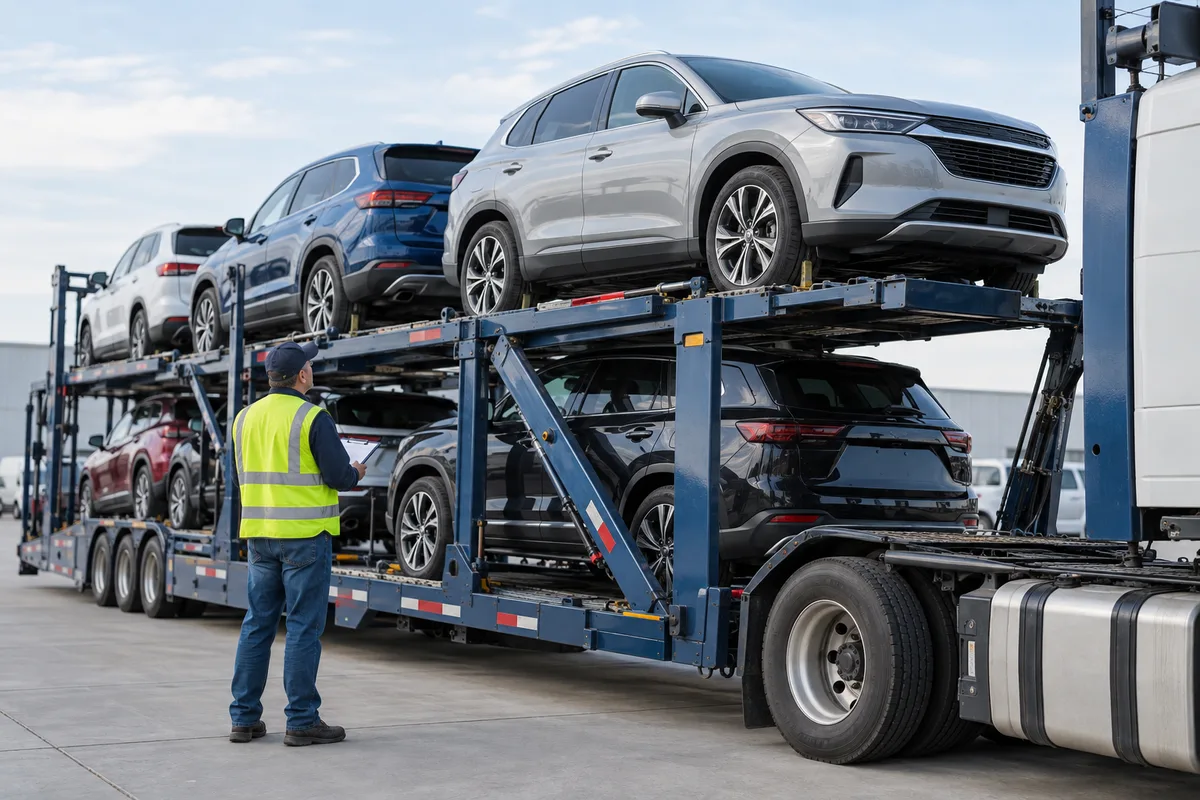
Most open trailers used for standard car shipments carry vehicles on two levels, and a vehicle on the upper level sits above the vehicles on the lower level rather than beside them. Your top-load request gets passed to the carrier that will actually load your vehicle, and whether it can be honored depends on the truck's deck space and loading order on pickup day.
Also called
top loading, top-load placement, upper deck placement
Sources
4
Last updated
A passenger vehicle secured on the upper deck of an open auto carrier. Illustration of a vehicle positioned on the upper deck of a carrier.

Why top-load service matters when you ship a car

Top-load service matters because of what sits above a vehicle on the lower deck of an open trailer. The upper deck does not get treated any better in transit. Top-load placement is described as protecting a vehicle from debris as well as from leakage from vehicles parked above it, and a vehicle on the lower deck of an open trailer is the one exposed to that leakage risk. Either level of an open trailer still exposes your car to weather and road debris, since neither level is enclosed. Enclosed transport is what removes that exposure entirely.

When a top-load request happens in a car shipment

You make a top-load request at booking, but whether it gets granted is decided at pickup, once the assigned carrier knows which vehicles it's loading and in what order. A carrier loads a two-level open trailer from the bottom deck up, so which vehicles end up on top is decided by loading order and the mix of vehicle sizes on the day of pickup — a top-load request made after the truck is already loaded usually cannot be honored. If you're shipping a low-clearance or newly detailed vehicle, you're more likely to ask for top-load placement than someone shipping a used daily driver.

Top-load vs bottom-load

Top-load and bottom-load describe the two deck positions on a two-level open trailer, and neither position changes which trailer or carrier is used.

Top-load positionBottom-load position
DeckUpper level of a two-level open trailerLower level of a two-level open trailer
Exposure noted by carriersWeather and road debris, the same as any open-trailer positionThe same exposure, plus the risk of fluid leaking from vehicles parked above
Can it be requestedYes, passed to the assigned carrier as a requestThe default position when no request is made or the upper deck is already full

Frequently asked questions about top-load service

Can top-load placement be guaranteed when booking?
Not in advance. A carrier sets deck position by loading order and the mix of vehicles on pickup day, so your top-load request gets passed along and honored when the load allows for it, not locked in at booking.
Does top-load service cost more?
Sometimes. Some companies list top-load placement alongside other add-ons that increase the price above the base rate for your shipment.
Does top-load matter on an enclosed trailer?
No. The distinction is specific to open trailers, which carry vehicles on two exposed decks. An enclosed transport trailer removes the weather and debris exposure that makes deck position matter at all.
Why would fluid leak from one vehicle onto another?
Your vehicle on the lower deck of an open trailer sits underneath any vehicle loaded on the upper deck, and fluid from that vehicle, such as oil or brake fluid, can drip down onto yours during transport.

Related terms

Glossary entries

All glossary terms