
Can You Put Personal Items in a Car Being Shipped?
Generally, no. Carriers don't allow personal belongings loaded inside your vehicle during transit unless you've pre-arranged it with them beforehand. Items left in the car anyway are not covered by the carrier's cargo insurance, and extra weight and loose cargo can cause problems for the driver.
Why can't you pack the car when you ship it?
Federal cargo securement rules make the driver responsible for making sure everything on the truck is properly secured and doesn't shift in transit, and loose personal items stacked inside your car aren't secured cargo the way the vehicle itself is.
49 CFR 392.9 requires a driver to inspect the cargo and load-securement devices within the first 50 miles of a trip, then re-examine them roughly every 150 miles or 3 hours of driving. 49 CFR 393.100 sets the underlying purpose of that inspection: cargo has to be contained, immobilized or secured so it can't shift enough to affect the vehicle's stability or maneuverability. A vehicle strapped down on a car hauler is secured; a box of your belongings sitting on the back seat isn't, and it becomes the driver's problem, and your vehicle's problem, the moment the truck brakes hard or hits rough road. Weight is the second issue: multi-car carriers running near a full load are already close to the federal 80,000-pound gross vehicle weight limit that applies to most commercial combinations on the Interstate System, so every extra hundred pounds loaded into vehicles on the trailer works against that ceiling.
Is it illegal to put personal items in a car being shipped?
No specific federal law bans a small item left in your vehicle during transport. An auto-transport carrier's operating authority is for hauling vehicles as property, not household goods, which is the regulatory reason carriers set their own limits rather than leaving it open-ended.
Our own FMCSA authority is stated as Broker of Property (Except Household Goods), the same distinction that applies to the motor carriers we dispatch to. Household goods are defined under 49 U.S.C. 13102(10) as personal effects and property used or to be used in a dwelling, and 49 CFR 375.101 applies an entirely separate set of federal rules (written inventories, condition checks on the items themselves, different insurance minimums under 49 CFR 387) to carriers authorized for that category. An auto hauler loaded down with your boxes, furniture or other belongings starts to look like it's performing that different, separately regulated service without holding the authority for it. So the practical answer is 'a little bit is probably fine, a lot is not,' not a strict legal line. Ask your assigned carrier directly rather than guessing.
Are personal items covered by cargo insurance if something happens?
No. Cargo insurance is written on the vehicle described on the transport paperwork, so belongings you load inside the car sit entirely outside what that policy covers.
If something is damaged, lost or goes missing from inside your car during transport, the carrier's cargo insurance, the same policy that covers the vehicle itself, doesn't extend to it, because personal effects fall under the household-goods definition rather than the vehicle-as-cargo definition the policy is written against. There's no separate 'contents' coverage layered on top for a standard car shipment. If packing the car is tempting for convenience, remember that nothing packed inside it is insured if it disappears or is damaged in transit.
What should you remove before the carrier arrives?
Clear out valuables, loose electronics and toll transponders before pickup. Take out all valuables, clear out loose items like phone chargers, GPS devices or garage door openers, and pull toll devices like EZ Pass or SunPass so they don't register charges as your car passes through toll zones on the carrier.
These are the items most likely to cause a problem. Valuables are uninsured in transit, loose items become a securement issue, and a toll transponder left mounted can rack up charges to you as the carrier's truck passes through unrelated toll zones. The full pre-pickup checklist covers everything else worth doing before the driver arrives, including fuel level and battery condition.
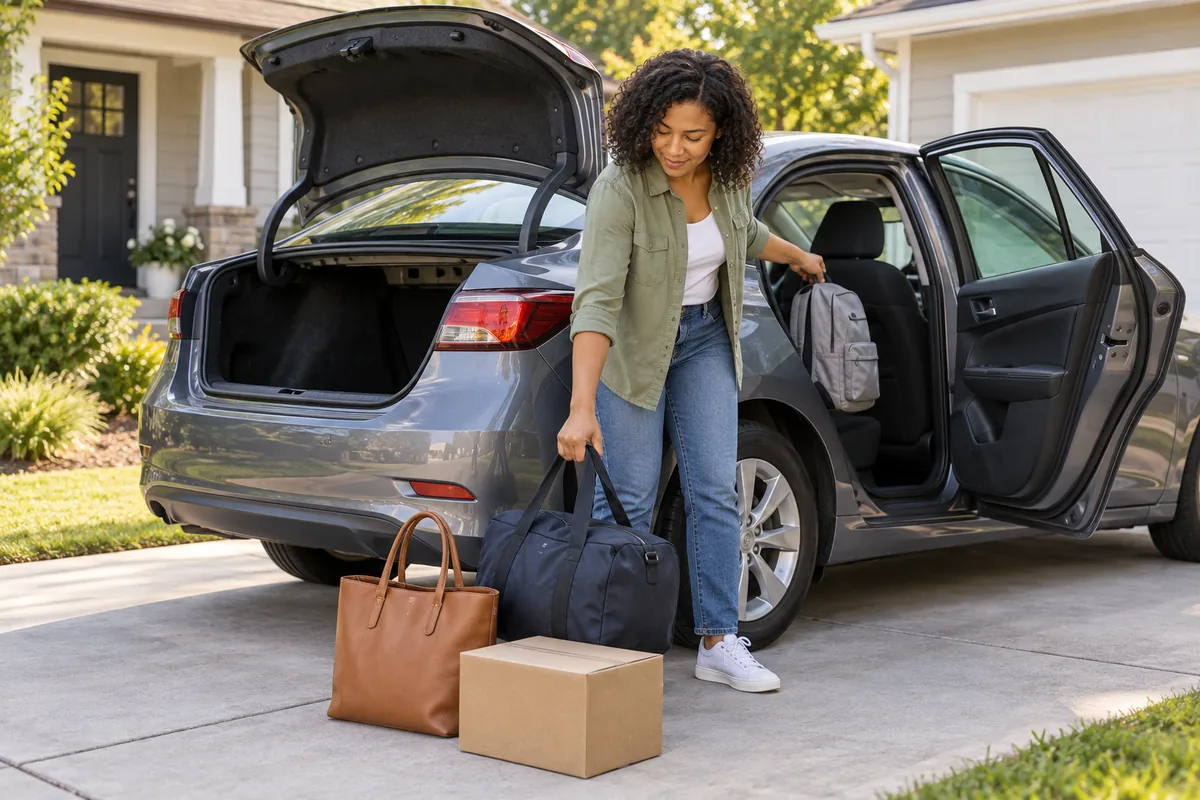
Can you ask the carrier to make an exception?
Yes, but ask before booking, not after the truck has already arrived, since our own standard practice allows personal belongings only when you've pre-arranged it with us.
A carrier that allows a limited amount of items inside your vehicle is making a decision about its own truck, its own weight margins and its own liability. The agreement has to come from the carrier assigned to your shipment, not from a general industry norm. If the answer is yes, confirm in writing what was agreed, and remember that none of it is covered by the cargo policy either way.
What happens if a carrier finds personal items in the car at pickup?
A carrier that finds unapproved personal items in your vehicle at pickup can refuse to load your car until they're removed, since the securement and weight decisions on that truck are the driver's responsibility, not yours.
What happens next varies by carrier. Some drivers will simply ask that items be removed on the spot, and others may decline the load entirely if the truck is already near its weight limit. The insurance answer doesn't change from carrier to carrier: nothing packed inside your car is covered by cargo insurance, whether or not a particular driver chose to allow it.
Frequently asked questions about personal items in a shipped car
- Can you put personal items in a car being shipped?
Generally no. Carriers don't allow personal belongings loaded inside your vehicle during transit unless you've arranged it with that carrier ahead of time. Anything you pack inside anyway isn't covered by cargo insurance.
- How much can you pack in a car being transported?
There's no single company-wide or federal weight figure that applies across every carrier. The amount, if any, your carrier allows depends on that carrier's own policy and how much margin it has under the federal weight limit for the load it's already carrying. Ask your assigned carrier directly before packing anything.
- Is it legal to ship items in your car?
No specific federal law bans a small item left in your car, but an auto hauler's own operating authority is for vehicles as property, not household goods, which is why carriers set their own limits rather than treating it as unrestricted.
- Are items left in a shipped car covered by insurance?
No. Cargo insurance is written on the vehicle itself, not on anything packed inside it, so belongings you load in the car aren't covered if they're lost or damaged in transit.
- What should I remove from my car before it ships?
Your valuables, loose electronics like chargers and GPS devices, garage door openers, and toll transponders like EZ Pass or SunPass, which can register charges as the carrier passes through toll zones.
- Can I ask my carrier to allow personal items anyway?
Yes, but the request needs to go to the specific carrier assigned to your shipment, and it needs to happen before pickup, not after the driver arrives. Even with permission, nothing packed inside the car is covered by cargo insurance.
Last checked