
GlossaryLogistics and operations

What Is Deadhead in Auto Transport?

Two lanes, same mileage, different price — deadhead miles are usually why. Deadhead miles are the distance a carrier drives empty, between the end of one paid shipment and the start of the next.

A carrier only gets paid for the miles a vehicle is actually on the trailer, so every deadhead mile is a cost the carrier absorbs or builds into a nearby paid leg. A pickup point far from a major interstate corridor adds deadhead miles on both ends of that leg, which is one reason two lanes of the same distance can carry different rates.
Also called
deadheading, deadhead mileage, empty miles
Sources
2
Last updated
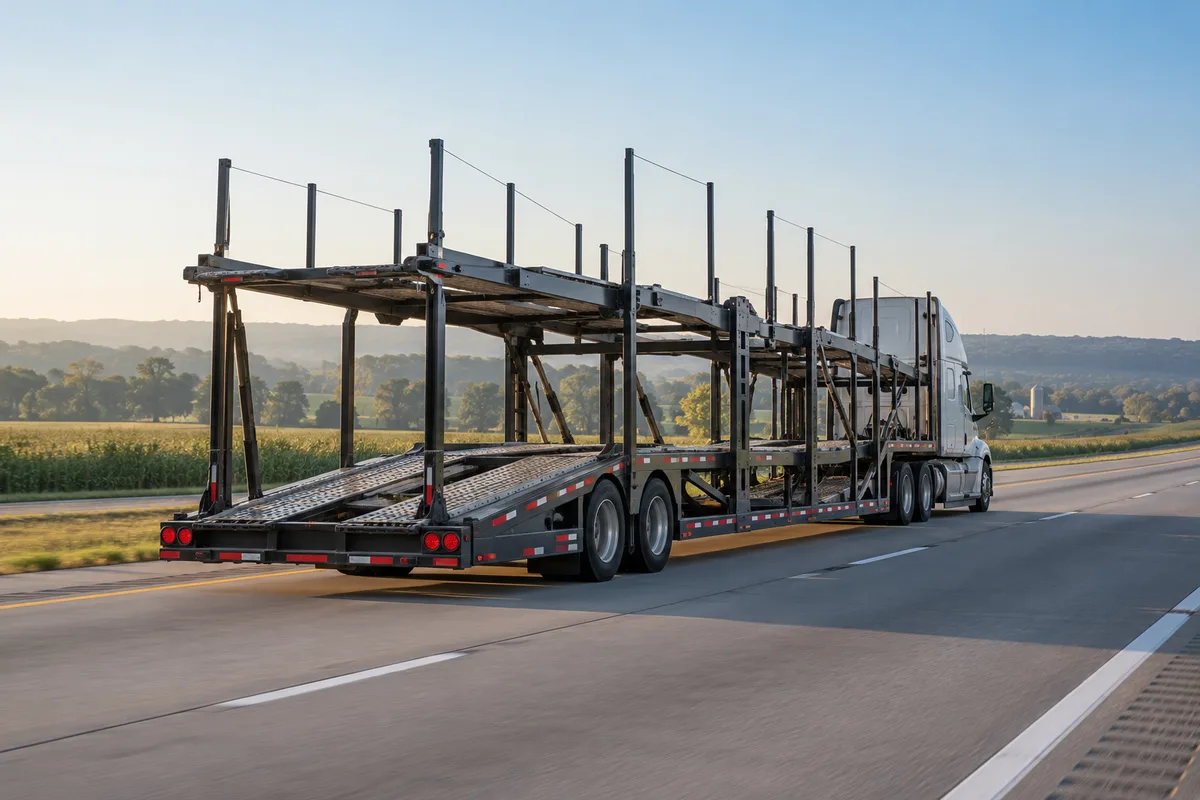
An empty open auto carrier traveling toward its next pickup. Illustration of an empty carrier covering deadhead miles between loads.

Why deadhead miles matter when you ship a car

Deadhead miles are the reason two lanes of similar distance can be priced differently, and the reason a rural pickup can raise your quote even when the mileage barely changes. A lane that pulls a carrier away from its usual route with no paid load waiting at the far end prices higher than the same distance run in a direction carriers are already returning through, because the carrier prices the deadhead miles on that empty return trip into the one paid leg. A rural pickup can mean a detour or more deadhead miles, which can affect price. Urban locations give carriers easier access and better chances to combine several vehicles on one route.

When deadhead miles happen in a car shipment

Deadhead miles happen before a carrier loads a paid vehicle, on the drive to a pickup point, and again after the last vehicle on a route is delivered, on the drive back toward the next paid job. A carrier running a route between two major metro areas can fill both directions with paid vehicles and carry almost no deadhead miles; a carrier pulled off that route to reach one rural pickup carries deadhead miles on the way in and, if no paid load is waiting nearby, on the way out as well.

Deadhead miles vs a backhaul

Deadhead miles are the cost a carrier is trying to avoid, and a backhaul is how a carrier avoids it.

Deadhead milesBackhaul
What it isThe distance a carrier drives with no paid vehicle aboardA paid load a carrier finds to fill the return leg of a route it was already running
Effect on pricePriced into the one paid leg that does carry a vehicleSpreads the route's cost across two paid legs instead of one
Whose problem it solvesA cost the carrier absorbs or passes onA cost the carrier avoids by finding a second paid load

A direction with strong backhaul demand, where carriers can usually find a paid load for the return trip, tends to carry a lower rate than the same distance run in a direction carriers typically drive back empty.

Frequently asked questions about deadhead miles

Do customers pay for deadhead miles as a separate charge?
Not as a separate line item. A carrier builds the cost of reaching a pickup point and repositioning afterward into the rate for the paid leg, rather than billing deadhead miles on their own.
Why does a rural pickup cost more even at the same distance as a city pickup?
A rural pickup often sits farther from the interstate corridors carriers already run, which adds deadhead miles a carrier has to drive to reach the vehicle and to return to its normal route afterward.
Is a lane with more deadhead miles always more expensive?
Not always, but a lane where carriers regularly drive back empty tends to price higher than the same distance run in the direction where a paid backhaul load is easier to find.
Does deadhead mileage affect how quickly a carrier reaches a pickup?
Yes. A carrier weighing several jobs may prioritize a pickup that fits its existing route over one that adds deadhead miles, which can affect how quickly a rural pickup gets scheduled.

Related terms

Glossary entries

All glossary terms